Buyers Guide to Pool Covers

Buyers Guide to buying Pool Covers

Choosing the best pool cover for your swimming pool is one of the most important decisions an Australian pool owner can make. A correctly selected pool cover can significantly reduce water loss, lower chemical and heating costs, extend the swimming season, reduce maintenance time, and in some cases improve pool safety. With Australia’s high UV exposure, rising water costs, and increasing energy prices, pool covers are no longer optional accessories — they are essential pool infrastructure.
According to SPASA Australia and multiple state water authorities, evaporation is responsible for up to 70% of total pool water loss annually. An uncovered 8m x 4m swimming pool can lose between 30,000 and 55,000 litres of water per year depending on climate and wind exposure. Modern pool covers can reduce this evaporation by up to 95–99%, saving thousands of litres of potable water each year and significantly reducing ongoing operating costs.==
This buyer’s guide has been developed using industry data, Australian pool retailer benchmarks, manufacturer specifications, and performance research from sources such as GeoBubble®, SPASA Australia, and other leading Australian pool cover suppliers. By the end of this guide, you will have a clear, evidence‑based understanding of which pool cover type is best suited to your pool, climate, and budget.

1. Solar Pool Covers

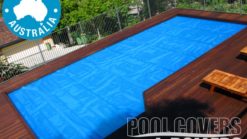
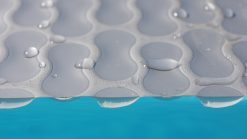
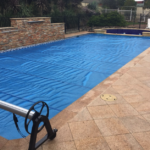
Solar pool covers — commonly referred to as solar pool blankets — are the most widely used pool cover type in Australia. They are manufactured from UV‑stabilised polyethylene (LDPE4, recyclable) and feature an air‑bubble structure that floats directly on the water surface. These air pockets act as both an insulator and a solar heat transfer medium.
Independent testing and manufacturer data show that the primary performance drivers of solar pool covers are material thickness, UV stabilisation, translucency and colour — not bubble shape. Despite marketing claims, there is no credible data demonstrating meaningful performance differences between circular, oval, or any other shape in terms of evaporation reduction, chemical usage reduction or temperature increase. This is supported by the fact that warranties across reputable manufacturers remain broadly similar for equivalent thicknesses. However, bubble shape, in particular bubble depth does have an impact on heat retention. 
Colour selection does materially impact performance. Translucent and light‑coloured covers (light blue or light green) consistently outperform dark or opaque covers for solar heat gain, while darker covers prioritise heat retention over heat generation.
“Transparent covers were more effective in improving the water temperature than opaque covers because more solar energy could be obtained by the pool water when the transparent cover was used.” – Francey J.L.A, Golding P, Clarke R (1980) Low Cost Solar Heating of Community Pools using pool covers 
Solar pool covers are primarily suited for outdoor pools — both heated and unheated — and are compatible with gas heating, heat pumps, and solar pool heating systems.
 
Performance & Benefits Evaporation
California State Polytechnic University did a comparative evaporation study that tested multiple pool cover types it found that bubble covers along with foam covers and slat covers reduced evaporation by around 95% in controlled conditions. Whilst Solar Discs and Liquid methods were less effective.  
The vast majority of the raw material manufacturers report that Solar pool covers reduce evaporation by up to 99%. For the average Australian backyard pool (approx 42,000L), this equates to approximately 3,500 litres of water saved per month, or more than 40,000 litres annually in warm or windy climates.
 
Chemical Savings
By preventing evaporation, solar pool covers significantly reduce chlorine and salt loss. Industry estimates show chemical usage reductions of 30–50%, as fewer chemicals are required to rebalance water lost through evaporation.
 
Temperature Increase
Solar covers are engineered to let short-wave radiation (UV, visible, and near-infrared light) pass through the cover and enter the pool water. This is the same portion of sunlight that actually warms the water when the sun shines directly on it. The key mechanisms are:
  • Short-wave transmission: The transparent/translucent material of a good solar cover transmits sunlight wavelengths that water readily absorbs, allowing the solar energy to become heat in the water rather than being reflected away.
  • Selective transmission and absorption: Some advanced covers are designed with wavelength-specific transmission characteristics — meaning they maximise transmission of heat-generating wavelengths while minimising the loss of that energy once warmed water re-emits it. This is the physical principle behind selective transmission materials studied in heat transfer research, which can increase absolute heating efficiency compared to non-selective opaque covers.
Heat Retention: How Pool Covers Keep Your Water Warm
A pool cover is the single most effective tool for retaining heat in your pool, primarily by controlling evaporation, which is the largest source of heat loss. According to ASHRAE, as cited by Lund (2000):
“Evaporation losses constitute the greatest heat loss from pools — 50 to 60% in most cases… A floating pool cover can reduce both radiation and evaporation losses… an enclosure can reduce this loss substantially, and a floating pool cover can practically eliminate the loss.”
These findings underline that even a simple cover can dramatically reduce heat escaping from the water surface.
The CSIRO’s research (Czarnecki, 1978) provides experimental confirmation of this effect:
“When a single layer clear plastic cover is placed on the water surface, the heat loss due to evaporation will cease while most of the incident solar radiation will be transmitted through the cover and absorbed in the water…”
“A double layer cover with an air space between the layers … also reduces the convection and radiation heat losses.”
In practical terms, pool covers work in three ways to retain heat:
  1. Preventing evaporation: The cover forms a barrier that stops water from escaping, which is critical because evaporative cooling accounts for up to 60% of total heat loss.
  2. Allowing solar gain: Clear or translucent covers let sunlight pass through, warming the water while preventing heat from escaping.
  3. Reducing convection and radiation: Multi-layer covers or air-bubble designs add insulation, further minimizing heat loss to the surrounding air and sky.
Convenience
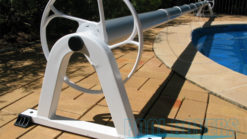
Solar pool covers are lightweight and flexible. A 500‑micron cover weighs approximately 500g per square metre, allowing most pools to be covered or uncovered in under 30 seconds when paired with a quality roller.
 
Debris Protection
While not fully sealed, solar pool blanket significantly reduces leaf, dust, and insect contamination, lowering filtration and vacuuming requirements. The ability for a Solar Pool Cover to reduce the leaf and debris load is impacted significantly by the installation method. Long cuts, or installs that allow the material to curve up and under the coping will keep out significantly more material than Flush Cuts. A “tongue” cut into the skimmer box will then allow the leaf and debris to be hosed off the pool cover.
 
Durability & Lifespan
High‑quality pool blankets typically last 8 years (500 micron) and up to 12 years (600 micron) when used with a pool cover roller and stored correctly. Inferior imported materials may degrade significantly faster under Australian UV conditions.
 
Australian Conditions Suitability
Solar pool covers offer the best balance of cost, performance, and convenience for the majority of Australian pools. They are particularly effective in temperate and warm climates where solar gain can be maximised year‑round.

Check out our range of Solar Pool Covers here

2. Thermal Pool Covers

Overview: A Thermal pool cover is typically an insulating cover, it is designed to maintain water temperature and minimize heat loss. Thermal Covers are usually 4.5mm thick  crosslinked polyolefin foam sandwiched between two layers of UV stabilised, polyethylene based polyfabric Canvacon film. Being a Closed Cell foam they have excellent insulation properties, as the material floats on top of the water, it provides significant evaporation reduction, hence a reduction in chemical loss and reduction in leaf and debris material. As the material is opaque it does not allow the Sun’s UV to pass through it and therefore works best on Indoor Heated Pools.

Thermal Pool Cover Benefits

    Thermal pool covers are insulating covers designed primarily to retain existing heat rather than generate new heat. They are typically constructed from 4.5mm cross‑linked closed‑cell polyolefin foam, laminated between UV‑stabilised polyethylene or polyfabric layers.
    Because thermal covers are opaque, they block solar radiation and therefore do not increase water temperature naturally. As a result, they are best suited to indoor pools or pools heated primarily by gas heaters or heat pumps.
     
    Performance & Benefits
    Water Savings
    Thermal covers reduce evaporation by up to 97%, delivering similar water‑saving performance to solar covers.
     
    Chemical Savings
    Reduced evaporation translates into chemical savings of approximately 30–50%, depending on pool usage and exposure.
     
    Temperature Increase
    Thermal covers provide zero solar temperature increase, as UV radiation cannot penetrate the material.
     
    Heat Retention
    Due to the insulating foam core, thermal covers offer slightly superior heat retention, reducing heat loss by up to 75 – 80%, making them highly effective companions for external heat sources. 
     
    Convenience & Handling
    Thermal covers are heavier than solar blankets and may absorb water over time, particularly on larger pools. This can impact ease of handling without a robust roller system.
     
    Durability
    Typical lifespan is approximately 5 years, depending on exposure and maintenance
     
    Australian Conditions Suitability
    Thermal covers should be primarily used in Commerical Pools, indoor pools, and installations where solar heat gain is not required and maximum heat retention over night is required. It must be noted that as the cover gets older the performance of the cover dwindles as it start to take on/ absorb the pool water. This added water also start to make the pool cover very heavy and cumbersome to use.

    For years we have said the  the best Thermal Pool Cover on the market is the Sunbather Thermal Cover,

    However, we now firmly believe the best value Thermal Blanket is the Raeguard Thermal Bubble Click here to go through to the product page. The Raeguard thermal bubble has the same thermal properties as a 4.5mm foam cover, is significantly lighter, will not absorb water over time and therefore maintain its performance throughout its lifetime. Which is an 8 Year Warranty vs 5 Years for a Foam Cover. Also a Raeguard is $28 per Sq/m vs a foam cover of $38 per Sq/m. There is just no comparison anymore.

    3. Leaf and Debris Pool Covers

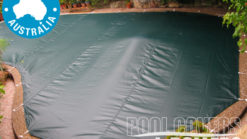
    Overview: Leaf and debris Pool covers also known as Winter Cover are typically used on high maintenance pools. They are designed to keep bulk leaves, twigs, and other debris up and off the water level, remaining dry so that the wind or a blower vac can be used to move them on. They were originally made from mesh or shade sail material, however, recently this is moved to polyethylene open weave material which is lighter and more durable This type of cover is typically designed to be installed over the winter months and to stay on for the majority of the non-swimming season. The cover is pinned down by a series of removable cleats, and tension applied to the cleats to keep the material off the water level.

    Leaf and Debris Cover Benefits

    Benefits:

        • Water Savings: Prevents up to 50% of pool water evaporation, with an estimated saving of 4,000 litres to 5,000 litres of water per month

          • Chemical Savings: Reduces chemical usage up to 25%. By reducing the water loss we reduce the chemical loss also

          • Temperature Increase: There may be a negative impact on temperature increase compared to a pool without a pool cover, as the weave will restrict the amount of UV passing into the pool.

          • Heat Retention: Zero Heat Retention as it is an open weave and does not sit on the water surface

          • Convenience: Typically used as a Winter Pool Cover, to reduce maintenance. The cover is pinned down with a series of removable cleats. Putting the cover on and off the pool is typically a 10-15 minute process, therefore is not ideal for pools that have regular use.

          • Debris Protection: Excellent debris protection, the cover is pulled taught up off the water level, so that the leaves and debris remain dry and they can be removed by the wind or a blower vac. The material being an open weave, allows the rain to pass into the pool, which typically means dirt and dust will also pass through. However, pairing with a Cordless Robot like the InverX leads to excellent results in maintenance reduction. A study by the University of Queensland found that using a leaf and debris cover can reduce cleaning time by up to 80%.

          • Durability: Leaf and Debris Covers have a Warranty of 5 Years however, typical lifespan of 10+ years

        Australian Conditions: Leaf and debris covers are particularly useful for pools surrounded by a lot of trees or pools positioned under deciduous trees in autumn when leaf fall is at its peak. They are particularly useful for Gum Trees, Bottlebrush, Melaleuca and Jacarandas – along with the leaf drop of deciduous trees like Liquid Ambers. Depending on the climate of the location of the pool, this type of cover may be on the pool 8-9 months of the year and removed for the summer period – Or for a couple of months during the Autumn leaf drop. A lot of the time a Leaf Cover is paired with a Robotic Pool Cleaner and placed on an old pool, that doesn’t get a lot of use now that the kids have moved on to their own homes.
        To check out our range of Leaf and Debris Pool Covers Click here

        4. PolyCarbonate Pool Covers, Slat Pool Covers or Hard Pool Cover

        Overview: Polycarbonate pool covers also known as Hard Pool Covers or Slat Pool Covers are a high-end product, that come in a number of different constructions – High Grade PVC, Extrdued PolyCarbonate or Foam Filled PVC most of which are tongue in groove in their assembly. These covers are precisely measured and laser cut to size. They provide excellent Heat Retention properties and Debris Protection properties. Depending on the colour and extrusion type of the material they can also provide excellent solar transfer heat or thermal transfer of heat into the pool (opaque colours or foam filed do not). The vast majority of Slat Covers due to their precise measure and fit and the material’s weight bearing capabilities (70kg+ per square metre) are regarded as Safety Covers. They can be easily operated by remote control or key, as geared winders are typically installed into the pool roller. This product is the most aesthetically pleasing and convenient of all pool cover types, it has excellent heat retention properties aswell as the added Safety aspect, so is widely regarded as the Gold Standard of pool covers, its drawback – price. Expect to pay between $10,000 – $30,000 for this type of pool cover

        Polycarbonate Pool Covers, Slat Pool Covers or Hard Pool Cover Benefits

        Benefits:

            • Water Savings: Prevents up to 70% of Water Evaporation, with an estimated saving of 3,000L per month

            •  Chemicals Savings: Reported reduction in chemical usage of 70%, our estimations are closer to 40-50%

            • Temperature Increase: The Translucent Polycarbonate type will heat the pool via Solar Transfer directly into the water. The Translucent with Black Base Polycarbonate Type will add heat via thermal transfer (heating the air in the polycarbonate slat and warming the black base). The opaque Polycarbonate has lesser thermal transfer properties. The amount in Degrees Celsius of how much heat is transferred is unreported.

            • Heat Retention: Excellent heat retention properties in excess of 70%. This is achieved by having a significant air pocket in the polycarbonate slat which acts as a thermal barrier.

            • Convenience: A lot of the Slat Covers are typically mechanised with Automatic rollers, either key or remote operated for ease of use

            • Debris Protection: Great for Debris Protection. A slatted cover is laser plot cut, so it fits perfectly to the shape of the pool (typically suitable for rectangle pools). Being a Hard material a high pressure hose, some water based detergent, and a soft bristle brush are ideal to clean the cover if it gets dirty

            • Durability: Typically comes with a 5 year warranty. Can reportedly last up to 20 years

          Australian Conditions: Widely regarded as the cover that is suitable for all locations. Typically used in new pool construction on high-end pools, if it is to be retrofitted to an existing pool, the pool will need to be rectangular or have straight sides with a rounded end.  Great heat retention properties. Depending on colour excellent Solar Transfer or Thermal transfer capabilities. Keeps out the vast majority of leaf and debris and due to its hard nature, will hold up against a lot of large material also. This pool cover could also be treated as a safety cover, however, a pool fence is still required under Australia’s pool regulations. At present there are two leading companies producing this type of hard pool cover they are the Remco SwimRoll and Sunbather’s Automatic CVX Cover. However, Stay tuned the team at Australis Pool Covers will have a competing product in this sector in the coming months.

          5. Safety Pool Covers

          Overview: Safety pool covers can also be known as ShutDown Pool Covers. They are typically made of a Cross Woven Vinyl, which is impervious to debris material and water. In Australia the two most common differ slightly in their function. The first looks very much like a Leaf and Debris Cover however, the cleats are lockable, and the material is Vinyl. The second has supporting poles spanning the width of the pool, with anchor points in the corner. The second version comes in a Manual and automatic retraction version. The water bearing capacity starts around 70kg and goes up from there.

          Safety Pool Covers Benefits

              • Water Savings – 99.6% of evaporation reduction. Around approx. 4,000L per month

              •  Chemicals Savings – Almost zero water loss, means next to no chemical loss. Being Vinyl, there is next to no UV light that passes through the material, therefore this type of cover can allow the pool to be completely turned off in the cooler months

              • Temperature Increase – Zero Temperature Increase due to the material not laying on the water, nor allowing the UV to pass through.

              • Heat Retention – Zero Heat retention as the material is not touching the water and allowing for thermal transfer

              • Convenience – The Convenience for the Safety Cover could be measured two ways. During the Winter months the pool is completely shut down, meaning there is zero maintenance required on the pool, making this type of cover exceptionally convenient. During the swimming months, a manual safety cover would be awfully complicated to get on and off of the pool regularly. An automatic safety cover would be significantly more convenient to get on and off of the pool, however, not as convenient as a solar pool cover

              • Debris Protection – completely eliminated any leaf and debris and dust from the pool.

              • Durability – approx. 5 year warranty depending on the manufacturer

            Australian Conditions: Australian Law requires a pool fence to be installed regardless of whether or not a Pool Safety Cover is used. If you are in a Cold Climate, then a Shut Down Pool Cover could be quite cost effective over the lifespan of the cover. If you are in a temperate climate and the pool will get regular use throughout the year, and if you were adamant that the safety features were required, then you would definitely need to invest in the automatic version, otherwise it would be too difficult to get the cover on and off of the pool regularly.

            We believe the best Safety Pool Cover on the market is the Remco PoolGuard, for more information Click Here

            How to Choose the Best Pool Cover

            Choosing the best pool cover depends on several factors, here are some key considerations:

                1. Purpose:
                      • Determine the primary purpose of the pool cover. Is it to increase the temperature of the pool, retain heat from an external heat source, stop evaporation, reduce cleaning maintenance, safety, or a combination of these factors?

                  1. Pool Location and Local Climate
                        • The local climate will impact on this decision, cooler climates will certainly require more heat retention properties, whilst pools in the North of Australia will not need any more temperature increase. Where the pool is located and its surrounding will also determine the type of cover, are there lots of native trees that drop foliage year round, or deciduous trees that have an autumn fall. Is the pool indoors? Is the pool shaded for long periods of time throughout the day

                    1. Pool Type:
                          • The type of pool – in-ground or above-ground and the shape of the pool can influence the choice of cover. Generally rectangular pools are compatible with most of the types of pool covers listed. Free-form pools, infinity edge pools have their own requirements and nuances that will effect the types of covers

                      1. Budget:
                            • Budget is a crucial factor. Solar Pool Covers are arguably the most affordable and within this type of cover you have levels of pricing evident. Material made in China is imported extremely cheaply and over the years this material is renowned for not lasting terribly long. However, if you are just needing a cover to meet a Certification requirement like Basix then this might be suitable. Although the European material has improved over the years, Australian made Pool Cover Bubble has a proven track record of lasting longer in Australian Conditions.
                              Polycarbonate Pool Covers (Hard Covers) and Safety Covers tend to be at the higher end of the Price scale, in particular the Hard Pool Covers as they typically tick all of the boxes, temperature increase, heat retention, water saving, safety and aesthetics.

                        1. Convenience:
                              • As a pool cover typically reduces the aesthetic nature of the pool, the ease and convenience of the product needs to be able to combat its overall negative looks. Automatic covers offer convenience but may require professional installation.

                        Conclusion

                        For most pools, a Solar Pool Cover like those sold on https://poolcoversandrollers.com.au/poolcovers/ will be the pick of the pool cover types. It is the most affordable, provides a good amount of temperature increase to the pool naturally and without cost. A Solar Pool Cover has excellent heat retention properties, making it an excellent companion product for Gas Heating, Solar Heating and Electric Heating. Will almost eliminate all water loss through evaporation and hence drastically reduce chemical usage/ loss. As the material is light weight and malleable, if paired with a quality pool cover roller like the Pool Cover rollers available at https://poolcoversandrollers.com.au/rollers/ they are also extremely convenient, taking less than 30 seconds to get on and off the pool for most pools, and if buying an Australian made Bubble, the pool owner will also get the longevity of a product, designed for the Australian climate. However, there are certain circumstances where the requirements of the pool lead the owner to one of the many other different pool cover types available.


                        How Does A Pool Heat Pump Work?

                        How Does A Pool Heat Pump Work?

                        People always need answers to their pool-heat-pump-related questions, and one of the key questions we get asked is: how does a heat pump pool heater work?

                        If you’re looking for a solution to heat your swimming pool when temperatures drop low outside, a pool heat pump is a great option to consider.

                        If you live in a place where the climate is cold, you will most likely need an electric pool heater to keep the water in your pool warm. But if you live in a place where temperatures do not usually drop below 10 degrees Celsius, a pool heat pump is your best option.

                        Pool Heat Pump Works

                        Pool heat pumps are one of the most cost-effective heating options

                        A pool heat pump is an option to heat your pool that will save you money for the long haul. Depending on the electricity rates of your location, a heat pump may very likely be the most cost effective solution compared with other solutions.

                        For instance, a 1.465 KW electric pool heater needs about 1,500 watts of power. All the electricity converts to heat. On the other hand, a 3.516 KW air conditioner uses only 1000 watts of power.

                        So it’s clear that heat pumps are around three times as efficient at heating a pool as straight electric heaters (whether they be electric or gas heaters). That’s why pool heat pumps can easily rival natural gas for cost-effectiveness.

                        According to energy.gov, people can reduce their pool heating costs by:

                        • Installing high-efficiency pool heaters.
                        • Using a pool cover.
                        • Managing the water temperature.
                        Heated Pool Jumping In

                        How does a swimming pool heat pump work?

                        Basically, pool heat pumps are air conditioners that use condensers to heat the pool water passing over a heated coil. The main word in the question is “pump” because it is what it does exactly and what exactly defines the system.

                        Pool heat pumps do not work like natural gas or electric heaters work. A pool heat pump pumps heat into the pool instead of directly heating the water. It means that heat is already there and will just be moved into where you want it to be.

                        How much time does it take to heat your pool with a pool heat pump?

                        Heat pumps use ambient temperature to heat your pool water. An ambient temperature system means that the warmer it is, the faster it can heat your pool. It may take days to heat the water to desired temperatures if it is 15 or 21 degrees celsius outside.

                        So it’s more efficient to heat your pool water when the air outside is hotter or during the hottest time of the day.

                        To give you an idea of how long it can be to heat your pool, consider that the type of pools that you would find in a gym being heated by pool heat pumps would typically take between one to two days to be fully heated up.

                        Pool Heated Close

                        Is it okay to leave a pool heat pump running all the time?

                        Having a heated pool is something your family can enjoy all year round. However, to keep it at a comfortable temperature, should you leave the heat pump running all the time?

                        The answer is no. A pool heat pump should not stay on all the time. These devices are equipped with thermostats that automatically turn on their heating function when the pool water temperature drops below the desired temperature.

                        If the thermostat is set too much higher than the outside air, it means that the heat pump will run constantly. Consequently, that means wasted money and energy.

                        What if you’re on holiday?

                        If you’re leaving the home to go on an extended holiday period, you can set the temperature setting lower. It is still on, but no one is using the pool, so you can opt to set the thermostat lower.

                        Setting it lower while you are on a vacation will ensure that the pool is continuously heated. When you return from your vacation, it will take you a shorter time to reheat the pool to the desired temperature.

                        Another technique to be more energy-efficient is to use a pool cover. The cover can help keep heat in so your pump does not need to turn on as often.

                        You might be thinking that you can save energy by turning the heat pump off on certain occasions. But that might actually cost you more.

                        The next time you turn it on, the equipment will actually work twice as hard to return your pool to the desired temperature.

                        After some trial and error, you will discover the best heat pump cycle for your swimming pool. 

                        Here are some further energy-saving tips for indoor pools.

                        Swimmer Pool Heated

                        What temperature do pool heat pumps work best?

                        Pool heat pumps are designed to raise a pool’s temperature to the ideal swimming range between 25 and 28 degrees Celsius. Because they work by taking warm air, pool heat pumps work best in humid places where ambient temperatures remain to be above 15 degrees Celsius.

                        Pool heat pumps do not operate efficiently for outdoor temperatures between -4 to +4 degrees Celsius for most systems. They work best when temperatures are above +4 degrees Celsius.

                        If the outdoor temperature is below +4 degrees Celsius, your heat pump will start losing its efficiency and consume more energy to heat your pool.

                        However, people have options for these devices that can operate under -10 degrees, like the Madimack range of heat pumps. Madimack units feature a defrosting function, which is the best way you can protect your heat pump from freezing due to low temperatures.

                        Such a function is an automatic process that stops the refrigerant from frosting.

                        Are pool heat pumps worth it?

                        Yes, they are definitely worth it! The main reason to heat your pool is for you and your kids to enjoy it all year round. Heat pumps are the most economical options that allow you to use your pool throughout the year without causing a heavy burden on your pocket.

                        Pool heat pumps come with a cheaper annual cost than natural gas pool heaters, making pool heat pumps more appealing to pool owners who wish to enjoy their haven of warmth all year through.

                        Of course, heat pumps are more eco-friendly than their natural gas and electric pool heating counterparts. Unlike other types that use propane gasses and fossil fuels, pool heat pumps draw heat from the natural air.

                        Our Madimack Heat Pumps

                        No posts were found for provided query parameters.

                        Elite V3 – Heat Pump Series

                        Re-engineered from the ground up to deliver the most advanced residential pool heater in the Australian market. Fitted with the latest inverter technology, the Elite V3 offers the highest efficiency levels, smallest installation requirements and quietest operational levels available.
                        No posts were found for provided query parameters.

                        Economic Heat Pump Series

                        Our Eco range of units are highly energy efficient pool heating systems, perfect for homeowners who are focused on minimising their utility bills.

                        Related Posts

                        What Size Heat Pump Do I Need for My Pool?

                        What Size Heat Pump Do I Need for My Pool?

                        Once you know the correct pool heat pump size required for your pool, you can confidently buy a unit that ensures you have the perfect temperature to enjoy swimming all year round.

                        There are factors to consider in determining the right pool heater size, including:

                        •  Length and breadth – meaning the surface area of your pool
                        • The particular climatic conditions in your location (air temperature, wind, evaporative cooling, etc.)
                        • How often you use your pool
                        • Your pool cover

                        You can use an online swimming pool heat pump size calculator that takes into account pool dimensions as well as location, heat loss rate, average depth and so on.

                        Pool Heat Pump Sizing

                        How to calculate pool heat pump sizes

                        Correct heat pump pool heater sizing ensures that you maintain the comfortable temperature you want, and for most people, the ideal temperature is more or less 29C.

                        The main problem with heating a pool is heat loss, not water volume. Pool water loses heat via evaporative cooling that naturally occurs due to solar radiation. It is the job of the heat pump to replenish heat when cooling occurs.

                        Thus, the rate of heat loss of your pool should also be considered when choosing the right pool heat pump size.

                        To calculate estimated heat loss for a 6 m x 9 m pool with a water temperature of 24C and air temperature of 18C:

                        •         Subtract 24 – 18 =  6
                        •         Multiply difference 6 x 6 m x 9 m = 324
                        •         Multiply 324 with the constant 0.027 = 8.75

                        Thus, the heat loss rate for this pool is 8.75 kW.

                        For round-shaped pools (including oval-shaped pools), use the radius in calculating the surface area. With the use of a pool heat pump size calculator, multiply the radius (r) by itself and with the constant pi (3.14).

                        That is R x R x 3.14. For a rounded pool with a radius of 4.6 m under the same temperature conditions, the surface area is 4.6 x 4.6 x 3.14 = 66.44 m2.

                        Then multiply 66.44 x 6 x 0.027. The heat loss rate for this particular pool is 10.76.

                        Pool Heat Pump Size

                        How many BTUs do I need for a 38,000-litre pool?

                        Another way to determine the right pool heater size without using a swimming pool heat pump calculator is by basing it on the pool’s volume.

                        This is an easier method of estimating because you only need to look at a heat pump sizing chart available online. Some charts even specify the BTUs required for a particular swim season.

                        Here is a chart based on volume:

                        Pool water volume

                        Summer

                        Spring & Fall

                        Extended

                        37,584 litres

                        14.65 kW

                        14.65 kW

                        24.91 kW

                        75,708 litres

                        24.91 kW

                        24.91 kW

                        32.24 kW

                        94,635 litres

                        24.91 kW

                        32.24 kW

                        36.63 kW

                        *Sizing based on in-ground pools

                        Your heat pump should be able to heat your pool by at least 0.11 degrees per hour. In other words, pool heaters should be able to increase water temperature by at least 0.560C per hour on an 862-litre of volume. That is the minimum requirement.

                        Is a bigger pool heat pump better?

                        Heat pumps have kW ratings between 14.65 kW to 43.96 kW. Smaller pools can get away with a 14.65 kW heat pump. For a larger pool, you might need a unit that heats water faster.

                        If your pool heater cannot replace heat lost through evaporative cooling, it can be undersized and needs replacement.

                        Also, do not worry about oversizing. The larger the output is, the faster your unit can heat water.

                        Generally speaking, it is important to oversize the heat pump as possible. Doing so means warming your pool fast while minimising energy costs.

                        Is it cheaper to heat a pool with gas or heat pump?

                        Which pool equipment is better – a gas heater or a heat pump? It depends on your requirements. But in terms of the operating costs, heat pumps are the better option.

                        The running cost of heat pumps is lower because they generally use less energy over long periods than gas heaters.

                        Another advantage of heat pumps is they last a longer time. Because of the high heat produced within the unit and its movable parts, a gas heater requires frequent repairs and fails before most heat pumps will.

                        Under careful maintenance, a pool heat pump can last up to 10 years or more. Keep your pool equipment free of debris, such as pine needles and leaves.

                        Also, ensure that rodents are kept at bay. Turn your heater off when it is not in use.

                        How can Pool Covers & Rollers help?

                        We’re experts in Pool Heating solutions. Based on the size of your pool. we can let you know exactly what pool heat pump will fit your needs without blowing your budget.

                        Simply call us on 0477241953 today.

                        Our Madimack Heat Pumps

                        No posts were found for provided query parameters.

                        Elite V3 – Heat Pump Series

                        Re-engineered from the ground up to deliver the most advanced residential pool heater in the Australian market. Fitted with the latest inverter technology, the Elite V3 offers the highest efficiency levels, smallest installation requirements and quietest operational levels available.

                        No posts were found for provided query parameters.

                        Economic Heat Pump Series

                        Our Eco range of units are highly energy efficient pool heating systems, perfect for homeowners who are focused on minimising their utility bills.

                        Related Posts

                        Things to consider when buying a Madimack Heat Pump

                        Things to consider when buying a Madimack Heat Pump

                        We all love swimming in heated pools, and especially in the colder winter months. So it makes sense to purchase a high-quality, energy efficient heat pump to create that perfect temperature for your own pool.

                        If you’re thinking about purchasing a Madimack Heat Pump, there are a range of things you should consider before making the final decision. The most important thing to consider is cost. This not only includes the cost of buying a pump but also the costs of plumbing, installation and its running costs.

                        Below, we’ll outline what you need to consider when getting a Madimack  Heat Pump in detail so you can assess it amongst other pool heating options on the market. That way, you’ll know what to expect before you make that significant financial investment

                        Madimack Heat Pump Review

                        Madimack Pool Heat Pump price

                        Depending on the precise model you choose, a Madimack Pool Heat Pump can cost anywhere between $2,640 and $13,816. The Madimack ECO Heat Pump is a generally more affordable model, powering up to 24 kW in a single phase and in a very energy efficient manner. The newer state of the art Madimack Elite V3 2022 Model is more pricey, but can power up to 31.8 kW in a single phase (without sacrificing energy efficiency). The Madimack Summer Eco also costs in the mid-$2000s, while the Elite Silent can cost more up towards the $5,000 mark.

                        But there is more than the initial Madimack Heat Pump price when it comes to maintaining one of these products, which we’ll outline below.

                        Installation costs

                        The cost to electrically install a Madimack Pool Heat Pump can be between $120 and $200 depending on the work required, equipment and location. You may also need to pay to install a circuit breaker switch.

                        You can’t install a Madimack Heat Pump yourself. It is not a heating system which you can simply just plug and unplug at will. You’ll need a qualified electrician to appropriately ground the unit and wire into the electrical system that’s already in your home.  

                        The exchanger on Madimack’s heat pumps typically come with a 25-year warranty. The warranty on the parts usually last for 4 years.

                        Plumbing costs

                        Plumbing costs can vary anywhere between $100 to $500, depending on the material used, the work involved and the location in which you need your pump installed. The plumbing required for a Madimack Heat Pump should be done by a plumber or a pool technical specialist.

                        While it’s not absolutely essential that a qualified professional installs your heat pump, we strongly recommend it. This is because the Madimack has very particular plumbing requirements that need to be followed exactly so that your warranty can remain valid. This includes things like maximum distance and no flexible pipe.

                        Miscellaneous costs

                        There are a range of other costs you may need to pay to ensure your Madimack Heat Pump is up and running properly and is also protected by the 25-year warranty. They have certain ventilation conditions and also need a minimum amount of space between one another.

                        Are there additional running costs?

                        What can be slightly more complicated is determining the running costs of a Madimack Heat Pump. This typically will depend on the precise Madimack model you use but also a number of other conditions. We’ll outline some of these considerations below.

                        Backyard Pool Heating

                        What factors affect Madimack Heat Pump costs?

                        To assess the daily or weekly cost of running your heat pump, below are some of the factors to take into account.

                        Weather

                        Heat pumps are known to extract heat even in subzero temperatures. But in those situations, they have to work very hard. Electricity isn’t used to create heat, but rather extract them from the surrounding environment. The result means higher energy bills caused by increased electricity costs.

                        Sizing

                        The size of your heat pump is another consideration that has an impact on your running costs. This is why it’s important to choose the correctly sized system from the get-go.

                        You can determine the right size of your heat pump by looking at the surface area of your pool, and the difference between its temperature and the air. There are many pool heat pump calculators online you can use to help you figure this out. Looking at the pool temperature at night, how humid it is, and how exposed it is to wind are also important factors.

                        Efficiency

                        This is a no-brainer, but how efficient your heat pump is will be an obvious factor on your heat pump running costs. If a pump has a higher Coefficient of Performance (COP) ratio, it typically means they have smaller operating costs. Note, however, that performance of your pump will change depending on the season.

                        What are the general costs of maintaining a pool?

                        It’s also critical not to forget the costs of running a pool more generally. In Australia, a swimming pool in your backyard can account for around a fifth of a property’s electricity bill. Costs you may incur go beyond pool heating options, which we’ll outline below.

                        Pumps

                        Pool filter pumps collect a lot of excess rubbish and debris that floats around in your pool. This is absolutely critical for your pool’s maintenance. Costs can run up to possibly around $110 every month over the summer periods and around $80 over the colder winter months.

                        Chlorinators

                        A chlorinator kills the harmful bacteria in your pool and thereby keeps it clean. This is a vital part of your pool and can typically cost 7 cents per hour to operate.

                        Evaporation

                        When the water evaporates after exposure to the sun, it can lose its heat. This can account for more than half of your energy loss. You’re therefore made to spend more on your heating bills to stop your pool water from evaporating.

                        Filter cleaning

                        Your pool filters may very well be the dirtiest components of your pool. This is because every piece of debris lying around in your pool needs to be filtered out. But to clean your filter, backwash is required two times a month. You may also need to rinse your filter’s cartridge filters every two months or so. This of course costs money.

                        Enjoying Pool Heating

                        Madimack Heat Pump Reviews

                        You should also always look at Madimack pool heat pump reviews online to know what other people are saying about the product. This is so you can be completely comfortable that the heating options you’re purchasing are legitimate and best for you.

                        We’ve heard some great Madimack heat pump reviews from our customers, and can highly recommend them as high-quality and outstanding pool heaters suitable for a wide range of swimming pools. 

                        If you’re looking for your next Madimack Pool Heat Pump, get in touch with the specialists at Pool Covers & Rollers today. Our customer service team will help you make the right decisions to keep your pool clean, warm and healthy. 

                        Our Madimack Heat Pumps

                        No posts were found for provided query parameters.

                        Elite V3 – Heat Pump Series

                        Re-engineered from the ground up to deliver the most advanced residential pool heater in the Australian market. Fitted with the latest inverter technology, the Elite V3 offers the highest efficiency levels, smallest installation requirements and quietest operational levels available.

                        No posts were found for provided query parameters.

                        Economic Heat Pump Series

                        Our Eco range of units are highly energy efficient pool heating systems, perfect for homeowners who are focused on minimising their utility bills.

                        Related Posts

                        8 Reasons You Should Get Solar Pool Covers

                        8 Reasons You Should Get Solar Pool Covers

                        Having a pool is a home improvement project that can come at a hefty cost. Homeowners need to do their research to understand not only what they can afford but also which type of pool is best suited for their home. At this level, the choice you make could increase the value of your property, which is why you don’t want to embark lightly on a swimming pool build project. 

                        However, having a pool also requires a full maintenance and servicing schedule. Running a pool comes at a cost. On average, homeowners in Australia can spend up to $3,725 per year. Indeed, when you combine the costs of cleaning, chemicals, repairs, maintenance, water top-up, and heating, the annual bill can be hefty. Failing behind essential pool care can make it hard to appreciate your swimming pool year after year. 

                        But you can make pool ownership more manageable with smart accessories that take a lot of the maintenance hassle off of your plate. One of these smart accessories is a solar pool cover. Below, we’ve compiled eight reasons why you want to consider solar pool covers to make your pool more enjoyable.

                        #1. Reduce the rate of water evaporation

                        Regardless of its design, no pool is immune to evaporation. Unfortunately, the hotter your pool temperature gets, the more vulnerable it is to evaporation. Outdoor pools can also lose a lot of water through high winds and low levels of moisture in the air. However, even an indoor pool is likely to experience some level of evaporation. A solar pool cover can provide a barrier to external elements that aggravate evaporation. With a pool cover, you can reduce the rate of water loss through evaporation by up to 95%, which significantly reduces the cost of water top-up. 

                        #2. Cut chemical usage by half

                        A direct consequence of reducing water evaporation is chemical consumption. Australian pool owners tend to rely on automatic pumps that keep track of chlorine levels in the water. You need to keep your chlorine levels safe to prevent bacterial development and risks. Chlorine keeps the water clean and safe to use. The more often you need to top your water up, the more chlorine you have to use. That’s precisely where specialist pool covers Australia can make a huge difference to your chemical consumption by preserving your water level. 

                        Additionally, it’s worth mentioning that for sensitive skin that is prone to chlorine rash, the use of a solar pool cover can cut down chemical usage by almost 50%. Bye-bye, chlorine rash, and hello swimming joy!

                        #3. Significantly heat up your pool

                        Do you have to push yourself to get into the water? Once you’re past the hot summer days, the water can get a little cold, even for the bravest swimmers. Maintaining the water temperature comfortable at an average 25°C can bring your heating costs up, whether you are using gas or non-solar electric heating. But the addition of pool covers can help increase the water temperature by up to 8°C, as it protects the surface from external factors while maximising sun heat. 

                        #4. Retain the heat

                        You don’t need to wait until the temperature is cold to use a solar pool cover. Keeping these when the pool isn’t in use can reduce heat loss, that would otherwise occur in contact with the elements. The wind is the main culprit that can dramatically drop your pool temperature, even when the weather remains pleasant. This will typically happen during the mouths that precede and follow the hotter summer months. You can extend your swimming enjoyment by a couple of months, even when the external temperatures have dropped. 

                        #5. Improve solar heating efficiency

                        If your pool heating system already uses solar energy, the addition of a solar pool cover can complement the existing system in place. Ultimately a solar cover enhances direct sun heat to deliver it back to the water. Depending on your standard solar season, you can expect to save 50% to 80% in energy costs across Australia. This will depend on your location, average climate temperatures, and the heat you expect from your pool. Combining solar energy as a heating system and with your cover will increase energy savings significantly.

                        #6. Keep the pool clean

                        Whether they are floating on the surface or sunken at the bottom, nobody likes the sight of leaves, small twigs or even dead insects in the swimming pool. These are guaranteed to kill the pool party mood instantly, without mentioning the time and effort you have to invest to keep the pool clean. Even indoor pools are susceptible to debris that can make their way inside your structure. A pool cover offers a safety net that captures the dirt and keeps it off your water.

                        #7. Compatible with an automatic pool cleaner

                        Automatic and robotic pool cleaners can save you a lot of time. They’re the kind of smart equipment that does the job while you can sit and enjoy a cocktail in the sun. However, large debris in the pool can strain both their efforts and your skimmer basket. By keeping debris off the water, you reduce unnecessary pressure on your automatic pool cleaning system.

                        #8. Reduce unwanted intrusions

                        Swimming pool intruders are more frequent in outdoor swimming pools. However, a surprising number of pests and wildlife creatures can also find their way inside your indoor pool. As such, the addition of a pool cover will protect your water from unwanted guests. Some of the most common guests you are likely to come across are ducks. Yet, don’t be fooled by the cute Instagram potential. Ducks will leave behind debris and waste. Besides, ducklings may not be able to get out of the water by themselves, so there’s an extra challenge for you when you want to have a cosy swim. Lesser pleasant intruders, however, can include snakes, spiders, and even kangaroos. Your pool cover will deter their efforts in finding a fresh spot! It’s also likely to keep your neighbouring wildlife safe, as many wild creatures need to be rescued after falling into swimming pools every year.

                        In summary, it becomes clear that a solar swimming pool cover is a hard-working addition that enhances your pool. As well as a method to reduce maintenance costs by keeping your chemical, water, and heating bills low, it also makes it easier to maintain and enjoy your pool all year round. Contact your swimming pool cover expert today.

                        Related Post

                        Pool Covers and Pool Heaters

                        Pool Covers and Pool Heaters

                        Let’s face it, buying a swimming pool for the family to enjoy is a very big investment out of any household budget, and to get a descent return on that investment it needs to be used and enjoyed as much as possible.

                        So, the notion that it can only be used for say six or seven months when the weather is warm and not used for the remainder of the year doesn’t seem to maximize the return on investment we would like. Kind of like buying a car and having it in the garage for six months every year.

                        Therefore, more and more these days, swimming pool buyers are also opting for the inclusion or pool heating systems to get closer to that year-round usage. But the problem with pool heating systems alone is that swimming pools are large bodies of water and can take a long time to heat up. This is especially true in outdoor pools where the pool heater introduces heat into the water from below the surface only to see that heat escape out of the water into the atmosphere. This makes the heating up process slow and costly especially if the pool heating system is powered by gas or electricity.

                        This is where a pool cover can be a great addition for the pool owner to have as it traps the heat that is introduced into the water from below and keeps it there. That way the water comes to the desired temperature much faster and therefore saves money because the pool heating system does not take as long to get the heating job done. It actually works the same way as trying to boil a pot of water with either the lid on or off. Having the lid on makes the pot come to boil much faster.

                        What Kind of Pool Cover can help you pool heater?

                        Solar bubble pool covers and thermal foam pool covers would be the two most common types of cover recommended by pool heating companies to help their pool heating systems do their job.

                        Of these two types, thermal foam pool covers are marginally more effective than solar bubble pool covers. However the thermal foam pool covers are approximately two or three times the price of the solar bubble pool covers and the differential in performance would not justify the difference in price in my opinion.

                        What is more, the foam pool covers are a great deal heavier when wet than the bubble pool covers and may even require a larger grade of pool roller to handle them.

                        Bubble pool covers are also much easier to install especially for a novice installer, as all you require is a pair of sharp scissors to cut the cover into the pool, whereas the thermal cover can be a much harder proposition and may even have to be precut and shaped at the factory prior to delivery which of course carries a cost as well.

                        The Great Allrounder

                        Solar bubble pool covers are in our opinion the great allrounder.

                        • They will certainly help your pool heating system do a great job giving you months more swimming enjoyment from your pool.
                        • They also stop evaporation by up to 97%. No more topping up pools.
                        • They will help keep your pool clean and most pool cleaners will run around underneath them without fuss.
                        • They are relatively light to operate and extremely easy to put on and off especially when using a roller.
                        • Compared to most other covers, they are very cost effective, making them a great buy.

                        Related Post

                        How Do Solar Swimming Pool Covers Work?

                        How Do Solar Swimming Pool Covers Work?

                        Time to hit the pool! But it’s cold. And needs more water. Holy cow, is that a pile of leaves at the bottom? That’s what we call instant pool buzzkill. Your guests run out of the water and now you either have to crank the pool heater up, spend time cleaning and re-filling it with water, or just call quits on your swim party.  The solution is simple (and budget-friendly!). A solar pool cover will not only keep your pool warmer, cleaner, and minimise evaporation, but save you a ton of money in the process.

                        How Do Solar Pool Covers Work to Keep Water Temperatures Up?

                        Everyone knows that on the hottest days the pool will be at its peak temperatures. The pool has been collecting that solar heat and warming itself up. Solar pool covers create a barrier to keep all that warmth in.

                        Solar pool covers are made similar to bubble packing material, but with a lot more awesome features. Without the solar cover acting as a blanket, sunlight passes right through.

                        For starters, these bubble covers are made of a thicker grade of plastic with tiny air pockets. The thickness is important because it makes them less likely to rip, easier to maneuver, and also a better blanket to keep the heat in. The tiny air pockets that look like bubbles are designed to trap the sunlight as pool heat.

                        Think of the solar cover as a blanket for your pool. It first traps the heat from the sun into its bubble pockets. Next, it takes that heat and delivers it back into the water. Finally, it insulates the pool with the cover so that heat doesn’t escape. The best solar pool cover will save the average owner 50-70% on pool heating costs.

                        With these warmer temps, you can extend your swim season a couple of months. Imagine being able to start swimming in April or May instead of June. And with the temperature a lot more stable, you’ll be able to enjoy the pool comfortably every time you want to hop in.

                        Why Do Solar Pool Covers Minimise Evaporation?

                        Evaporation is the largest energy sucker for swimming pools. No pool is immune to it, it’s just part of nature. But using a pool cover can up to 95% of pool evaporation. Basic science reminds us that the hotter the pool temperatures are, the higher the wind blows, and the lower the humidity, then the larger the evaporation rate.

                        Even indoor pools are subject to evaporation. They require ventilated air just to control a large amount of humidity released into the air from pool evaporation.  Solar pool covers provide a barrier to the elements, for both outdoor and indoor pools.

                        Solar pool covers minimise that evaporation by keeping the water covered. This allows for less evaporation into the air. Covering a pool when it is not in use is the single most effective means to minimise evaporation.

                        If you are minimising evaporation, then you are saving money by conserving water. It’s really that simple.

                        Will My Pool Stay Cleaner With a Solar Pool Cover?

                        The short answer is yes. Just like anything that covers, it is going to protect. Expect reduced cleaning times and fewer leaves to make their way into your pool. Also worth mentioning is that it helps keep away algae spores which will keep that pool sparkling longer. Often times fewer chemicals and maintenance is needed. This all amounts to more time relaxing and having fun in the pool, not outside of it.

                        What to Look for in a Solar Swimming Pool Cover

                        Pool Size

                        Solar pool covers come in a wide variety of sizes. Measure your pool and use the widest and longest points to purchase the best fit. Trim the edges with sharp scissors to match your exact shape and fit into your skimmers. When in doubt, go up a size.

                        Cover Quality

                        Many pool owners report getting up to three years’ use of a quality solar cover. UV-resistant vinyl covers are generally more durable and can even carry warranties with them. 

                        Taking On and Off

                        Taking the solar cover on and off by hand has been a reported drawback from some pool owners. You can work around this by purchasing a manual or automatic roller or reel system. The pros definitely out-weight the cons.

                        Get the Most of out of Your Solar Pool Cover

                        Still wanting more? You can improve the effectiveness of your solar cover with a few simple additions.

                        Pool Heat Pumps

                        These heat pumps will harness the solar heat and combined with your pool cover you’ll get a quicker warm temp. Pool heat pumps use a coil and fan to draw in natural heat, converting it to in turn heat your water.

                        Solar Pool Heater

                        This is a combination of panels installed usually on a roof and a powerful pump. The panels work to collect the energy (heat) and the pump sends water to the panels. The water goes through heated tubing and back into the pool. Without regular sunlight, know that heat from this option isn’t likely.

                        Block Wind

                        A top offender of pool evaporation is wind. Wind increases water surface area by creating small ripples and waves in the pool. Many pool owners enclose their pool in a lanai for this reason. Other options include shrubbery or hardscaping around the pool deck.

                        Bottom line, use your solar pool cover anytime the pool isn’t in use. With its ability to cut down on energy and water costs, heat your pool naturally, and lower evaporation there is no reason you shouldn’t pull it out every day!

                        Check out top pool covers now.

                        Related Post

                        Leaf and Debris Cover v Solar Bubble Pool Cover

                        Leaf and Debris Cover v Solar Bubble Pool Cover

                        “I am considering buying a pool cover but I don’t know which type to pick, should it be a leaf and debris cover or a solar bubble cover”?

                        That question I hear at least once per week, every week of the year. So, let’s see if we can answer it for everyone. Whenever I am asked that question, I often initially answer the question with a question eg; “Why do you feel you need a pool cover”? The answer the customer gives to this question usually guides which way I recommend.

                        There are many types of pool cover, but I will just examine the two most popular which is leaf and debris covers and solar bubble pool covers.

                        Leaf and Debris Covers

                        Let me just say early in this blog, I sell far more solar bubble pool covers than leaf and debris covers and I recommend solar bubble pool covers far more that leaf and debris covers as well. Don’t get me wrong, leaf and debris covers do an excellent job of keeping leaves, sticks and other rubbish out of a swimming pool. But they are definitely harder to put on and take off, and I often tell my customers, “they do an excellent job of keeping swimmers out of the pool as well”. Attaching a pool cover roller to a leaf and debris cover can make the “put on and take off process” much easier, and one of my goals is to help customers become aware that a pool cover roller can be an asset for a leaf and debris cover as well.

                        For all of that, I feel that a solar bubble pool cover is a much better “allrounder” than a leaf and debris cover in most situations and I will only recommend a leaf and debris cover when a pool is absolutely covered in leaves, so much so that a pool cleaner would have difficulty progressing around the pool. When you have this situation, there really is no alternative to a leaf and debris cover and they will do an excellent job.

                        Having said all that, Leaf and Debris covers are also known as “winter covers” as many customers by them to basically shut their swimming pool down over the winter months. Often this purchase has little to do with leaves etc, and more to do with the customer’s desire to close the pool for the winter and not touch it until the next swimming season arrives.

                        Leaf and Debris Pool Cover Pros and Cons

                        Pros

                        • Absolute shut out of leaves, sticks rubbish and even dust.
                        • Light weight mesh fabric
                        • Some assistance with evaporation but not nearly as good as a solar bubble pool cover
                        • Can be handled without a roller

                        Cons

                        • Harder to put on and take off.
                        • Fixed into the pool surrounds with cleats which can be a trip hazard
                        • Offers little in the way of introducing heat into the pool.

                        Solar Bubble Pool Covers

                        These covers are much more widely known than a Leaf and Debris pool cover and they have a wider range of things they can do. Bubble pool covers are excellent at stopping evaporation and will do so by up to 97%.   They will also assist in keeping the pool warm and for this reason are often offered as a tandem product with pool heating equipment such as heat pumps and solar pool heating systems. Even without pool heating equipment, a bubble pool cover can heat a pool by as much as 8 degrees C in some situations just by transferring the sun’s rays through the cover into the pool water.

                        “But what about keeping leaves and rubbish out” I hear you ask. Bubble pool covers are better at keeping leaves etc, out of a pool than many people think. Cut properly and used in tandem with a pool cleaner they can be extremely effective at keeping a pool clean. 

                        The idea is to cut the bubble pool cover long so that it laps up the side of the pool wall. If you have an overhanging pool coping tile then, even better as the pool cover can then just tuck in under the coping tile. Doing this then seals off the sides of the pool cover so that leaves etc, cannot get into the pool. Then you can cut an opening flap into the skimmer box canal and any leaves can be just hosed, swept or blown in through the skimmer box canal and captured in the basket. 

                        This leads me to another question I am often asked; “will my pool cleaner work with the pool cover on”? The answer is definitely yes, as pretty well all pool cleaners will run around quite happy under a pool cover.

                        Bubble Pool Cover Pros and Cons

                        Pros

                        • Better versatility. bubble pool covers are good at most roles associated with a pool. No, they are not as good at keeping rubbish out of a pool as a leaf and debris cover, but they are not bad either and used with a pool cleaner are very effective.
                        • The “put on and take off” process is simple and quick, much easier than a leaf and debris cover provided you use a pool roller with them.
                        • They will stop pool evaporation by up to 97%
                        • Will introduce heat into the pool themselves.
                        • If a roller is used and with these covers it should be, the roller is not fixed permanently to the pool surrounds. It is meant to be moveable.

                        Cons

                        • When wet, they are heavy and slippery, so they really need a pool roller to be handled easily.

                        Final Word

                        Above are the differences and the pros and cons of each cover type. So, how to make a decision:

                        1. Ask yourself the same opening question I would ask you. “Why are you considering buying a pool cover and what are you hoping to achieve”?
                        2. If your answer is that you have a bad leaf and debris problem, or you just want to shut the pool down for the winter, then the choice should probably be a leaf and debris cover.
                        3. If you answer is a little bit of everything, evaporation, leaves and heating, a bubble cover and roller will probably serve you best, provided your leaf problem is not extreme.
                        4. If you have just bought some pool heating equipment then the answer is definitely buy the bubble cover and roller as this will assist your pool heater enormously.

                        I hope this helps you with the choice

                        Related Post

                        Winter Pool Covers: Which Is for You?

                        Winter Pool Covers: Which Is for You?

                        As a homeowner with a pool on your property, you know the amount of care and maintenance a pool requires. It might take some effort to keep your pool clean and healthy year long, but it’s worth it in the end. Your home’s pool is its best feature. It’s where you spend quality family time and have get-togethers. The only time you find yourself not using your pool is during Australia’s fall and winter months. When fall and winter make an appearance, it’s time to say your goodbyes to your pool until spring and summer. Winter pool covers are an essential accessory to have during these colder months. Rather than allowing your pool to accumulate leaves, debris, and rubbish of all sorts, place a winter pool cover on it and keep it clean all season. Not only will doing so keep your pool happy, but it’ll keep you happy as well since you won’t have to worry about a dirty pool come spring. Are you searching for winter pool covers in Australia? If so, you have a few options to choose from. Continue reading below for everything you need to know about pool covers and how to choose the right one for you!

                        400 Micron Pool Cover

                        Made here in Australia, the 400 Micron Pool Cover is 100% recyclable and will be welded across your pool. This makes rolling it up on the pool cover roller much easier. The 400 Micron Pool Cover is the thinner cover option. 400 Micron refers to the size of the thickness of the cover. The bigger the micron number, the thicker the cover is. Not only will this cover stop your pool’s water from evaporating, but it’ll also keep it warm for you. The colour of the cover is translucent and allows for the sun to pass through the cover and reach the water. As the water warms, the heat is then trapped inside as the cover also acts as a barrier not allowing heat to exit. When the cover is installed, it’s shaped to make your pool precisely. No water will be left exposed, which helps stop the evaporation process and helps keep the water temperature warm.

                        500 Micron Pool Cover

                        The 500 Micron Pool Cover is also 100% recyclable and made in Australia! It provides all of the same benefits of the 400 Micron Pool Cover with a larger micron number, meaning that the thickness of the cover is more than the 400. The main difference between the 500 Micron and 400 Micron pool covers is the micron number and the price. This pool cover is a bit more expensive than the 400, but for good reason. When purchasing a new pool cover, the micron number gives you an idea of how thick the cover is. In general terms, the thicker the cover, the more durable it is and the longer it’ll last. 400 and 500 micron pool covers are both a good thickness, but the 500 is thicker than the 400. This is why you’ll pay more when choosing the 500 Micron Pool Cover.

                        Leaf and Debris Pool Cover

                        Wintertime calls for solar pool covers that allow the sun to heat the water through the cover, however, leaves and other debris also present a problem for your pool during the fall and winter months. The Leaf and Debris Pool Cover is a mesh cover made from non-woven polypropylene material, which differs from the micron covers. This cover has a roped hem edge and comes with removable cleats. It also doesn’t require a pool cover roller to install or remove. The cover is lightweight, making installation a simple task for one person. Because it’s a mesh cover, rainwater does pass through the mesh and enters your pool. Leaves and other debris, however, won’t be able to pass through the mesh. If you’re not as worried about the temperature of your pool water and are more so worried about the debris, then this is an excellent option for you!

                        Above Ground Pool Covers

                        Above ground pools also have covers available for the fall and winter months. When searching for a pool cover for an above ground pool, you need a cover that meets your pool’s exact specifications. You can custom design your own above ground pool cover to save money! Why spend money on a pool cover size that’s not right for your pool? Only spend money on what you need by custom designing it. Your above ground pool cover will keep your pool clean for as long as you have it covered!

                        Pool Cover Rollers

                        When purchasing certain types of pool covers for your in-ground pool, it’s important to keep in mind that you’ll need a pool cover roller to aid you in the installation process. There are two options to choose from: mobile and stationary. These rollers make removing your pool cover a simple process! They also prevent damages from occurring to the covers as well. No manual labour is required when using a pool cover roller and you can simply wheel it away when not in use. You can also decide to go with a stationary roller, which stays right next to your pool at all times for easy access.

                        Which Winter Pool Covers Are Right for You?

                        If you’re searching for winter pool covers in Australia, you have several options to choose from. Keep this guide in mind when deciding which pool cover is right for you! Are you ready to make a purchase? Once you know which pool cover you want to use on your own pool, click here to contact us with any questions you might have!

                        Related Post

                        How to install a solar Blanket Pool Cover

                        How to install a solar Blanket Pool Cover

                        Over the years we have been asked a lot of questions about installing a pool cover, and there always seems to be a small group of questions that are asked over and over again. So let’s tackle them first.  

                        Do you lay the bubble side up facing the sky or down facing the water?

                        The answer is the bubble side faces down facing the water. Can you imagine trying to clean the dirt off the pool cover if the bubble side faced up.  

                        What do you use to cut in a pool cover, scissors or a Stanley knife?

                        The answer is scissors and just a pair of scissors from a $2.00 shop is all you need and they will do a great job. Stanley knives don’t give enough control when you’re cutting in a pool cover.  

                        Do you cut the pool cover flush to the pool wall or longer so that it pals up the sides of the pool?

                        This answer largely comes down to the pool owner’s preference, but it must be remembered that a pool cover will shrink a small amount in its first six weeks of life on the swimming pool. So, if you cut the pool cover flush to the pool wall to begin with, you risk having the pool cover shrink away from the pool wall soon after you install it. A better plan is to cut the pool cover in long at the start and then about six weeks later go back and trim it in flush if you want. By that time, any shrinkage will have already taken place. What I am seeing is that a majority of customers prefer to leave the pool cover cut long as it then does a better job of controlling leaves in the pool. If you are going to cut it in this way, remember to make two vertical cuts in the pool cover at the skimmer box channel entrance. Then push the flap you have made into the skimmer box channel. This will allow you to hose or sweep any debris that falls onto the pool cover into the skimmer box and capture it in the skimmer basket.

                        So, how to start:

                        • After you have rolled out the pool cover onto the pool make sure it sits straight on the swimming pool and has an even overhang on the pool on all sides. 
                        • It’s a good idea to tap the pool cover down into the pool using the pool broom to make sure it sits down into the pool. 
                        • First Cut: If there is a long straight side, trim about a two bubble width off it to make sure the side is straight and push the side down into the water so that the cover lays flat on the water right up to the pool wall with some of the cover lapping up the side of the pool wall. 
                        • Now tuck the top edge of the pool cover under the overhanging pool coping if there is one. If there isn’t an overhanging pool coping allow the cover to lap up the pool wall about 100mm. First Side Done! 
                        • If you have a partner to assist you, get them to sit on the side of the pool that you just cut ( the first side) and have them hold the pool cover in place while you move around to the opposing side of the pool ( the second side) to make the second cut. If you are doing this for the first time it’s a good idea to have your partner hold the pool cover in position while you go to make the second cut, because you run the risk of pulling the pool cover away from the first side wall when you are trying to make the second cut. This would result in the pool cover being cut too short. 
                        • Second Cut: With your partner holding side 1 of the pool cover in place, push side 2 down towards the water so that the pool cover lays flat on the water right up to the pool wall. The remainder of the pool cover will lap up the side of the pool wall. Now, find the point where the pool cover comes up past the overhanging pool coping. This is the point where you cut side number two. 
                        • Make the cut for side number two and then tuck that side under the overhanging pool coping. Side number two done. 
                        • Because side one and two are on opposite sides of the pool and therefore are opposing each other, they will lock each other in position and your partner does not have to hold the cover in position on side one any longer. 
                        • Your can now repeat the entire process on the narrow sides of the pool to complete the cuts for sides three and four. Cutting in almost complete! 
                        • At this point with the pool cover all trimmed in, you will almost certainly notice that some pockets of air have been trapped under the pool cover forming lumps and bulges in the pool cover as it lays on the pool surface. These lumps and bulges will to a small degree interfere with the ideal length and width of the pool cover as it lays on the water’s surface. To deal with this, using the long pool broom, push as much of this captured air towards the side of the pool so that it escapes from under the pool cover. Once this is done, the pool cover will now sit a little flatter on the water’s surface than before. 
                        • Now that some of the captured air released from under the pool cover, take a final slow walk around the pool and look to see if any final trimming is necessary.

                        Final Thoughts

                        Two things are certain when cutting in a pool cover.
                        1. Once you cut it off, you cannot put it back. So it is far better to cut off a small amount if you are not confident and sneak up on the final result.
                        2. No one is offering a prize for the fastest cut in, so go slowly and think about each section.
                        If you remember these two points alone, and take plenty of time and only take off small amounts each time, it is difficult to make a mistake. Even the Pro’s started out following this advice.

                        Related Post